How to Choose the Right Laser Hair Removal Equipment for Your Needs?
Choosing the right Laser Hair Removal Equipment is crucial for effective hair removal. According to a recent report by the American Society for Aesthetic Plastic Surgery, the demand for laser hair removal has increased by over 25% in the past three years. This growth reflects a rising awareness of personal grooming and aesthetics. However, with many options available, selecting the appropriate equipment can be overwhelming.
Dr. Sarah Thompson, a leading expert in laser dermatology, states, “Investing in the right Laser Hair Removal Equipment is essential for achieving long-lasting results.” Her insight underscores the importance of understanding various technologies and their applications. Many consumers prefer devices that are versatile and suitable for different skin types.
Despite advancements in technology, not all equipment guarantees success. Users should be cautious of misleading claims. Evaluating the specifications and consumer reviews is necessary to avoid disappointment. Understanding these factors ensures informed decisions, paving the way for an effective hair removal journey.
Understanding Different Types of Laser Hair Removal Technologies
When choosing laser hair removal technology, understanding the options is crucial. Different devices target hair follicles using various wavelengths and techniques. Alexandrite lasers are effective for fair skin and light hair. These lasers have a fast repetition rate, making them suitable for larger areas. However, they may not perform well on darker skin tones.
Diode lasers offer versatility. They work on a variety of skin types. They penetrate deep into the skin, targeting hair follicles effectively. This type may require multiple sessions for optimal results. For those with darker skin, Nd:YAG lasers can be a better choice. They work safely by bypassing the melanin in the skin.
Tips: Consider your skin type before selecting a laser. Consult with a professional to understand which technology suits you best. Also, be aware that individual results may vary. What works for one person may not work for another. Experience and expertise are key. Make sure to choose a provider who specializes in laser hair removal.
Evaluate your budget as well. The cost of treatments can vary greatly. Sometimes, cheaper options may not deliver the desired results. Take your time to weigh your options carefully. Your safety and satisfaction should come first. Don't rush into a decision. Choosing the right equipment needs thoughtful consideration.
Evaluating Your Skin and Hair Type for Laser Treatment Compatibility
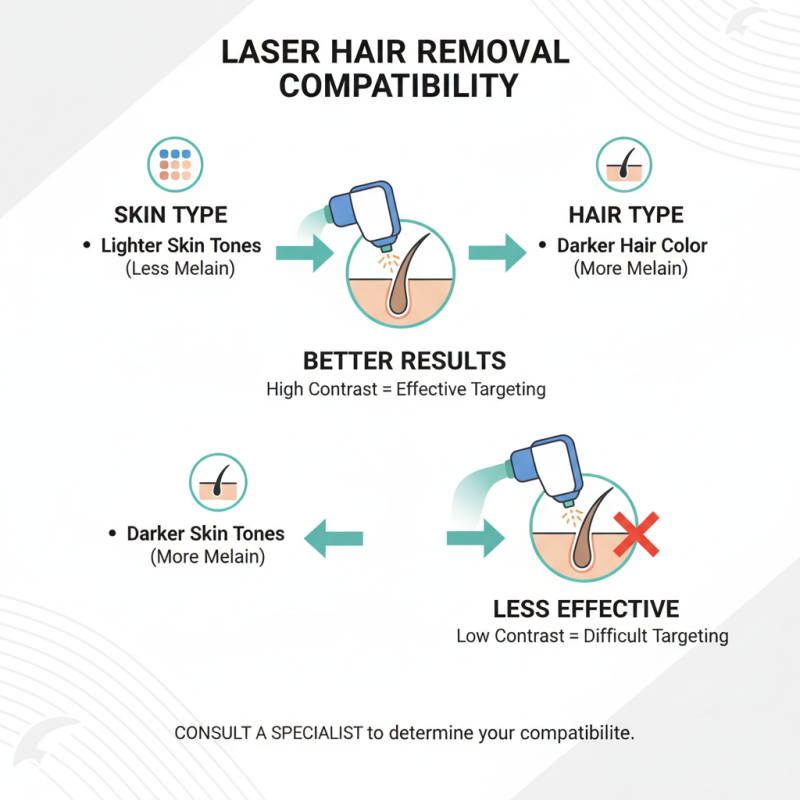
When choosing laser hair removal equipment, understanding your skin and hair type is crucial. Different skin tones and hair colors respond differently to laser technology. For instance, individuals with lighter skin and dark hair usually achieve better results. The contrast allows the laser to target the hair follicles more effectively.
On the other hand, those with darker skin tones may face challenges. The laser can be absorbed by the melanin in the skin, which might lead to burns or hypo-pigmentation. It’s essential to evaluate your skin's reaction to previous treatments. Have you experienced any adverse effects? An honest assessment can guide your decision.
Consulting a professional is advisable. They can help you understand your specific needs. Additionally, take note of how your skin reacts under stress. Sun exposure or recent skincare products might impact laser effectiveness. Each individual has unique conditions, so a tailored approach is necessary. Consider these factors carefully to ensure you select the most compatible laser treatment.
Considering Budget and Long-term Investment in Equipment
When selecting laser hair removal equipment, considering budget constraints alongside long-term investment is crucial. According to recent studies, the initial price can vary significantly. Entry-level devices may start around $200, while professional-grade equipment can exceed $10,000. Lower-priced options might seem appealing but could lead to high operational costs. Cheaper devices often require frequent maintenance and replacement parts, while investing in quality equipment will typically result in lower costs over time.
Maintenance is a critical factor in the total cost of ownership. For instance, a report by the American Society for Aesthetic Plastic Surgery indicates that laser equipment can incur up to $2,500 annually in maintenance fees. Moreover, a well-maintained system enhances efficiency, requiring fewer sessions per client. This efficiency can lead to increased customer satisfaction and retention, a crucial aspect for business growth.
Market trends suggest that facilities using higher-quality, reliable laser systems experience better ROI. A survey published by the Journal of Clinical Aesthetic Dermatology found that clinics utilizing top-tier equipment reported a 35% increase in client retention rates. Investing wisely can pay off in the long run. However, it’s essential to balance the upfront costs with the expected lifespan and profitability. Reflections on equipment efficiency and customer outcomes are important for making an informed choice.
Researching Manufacturer and Product Reviews for Informed Choices
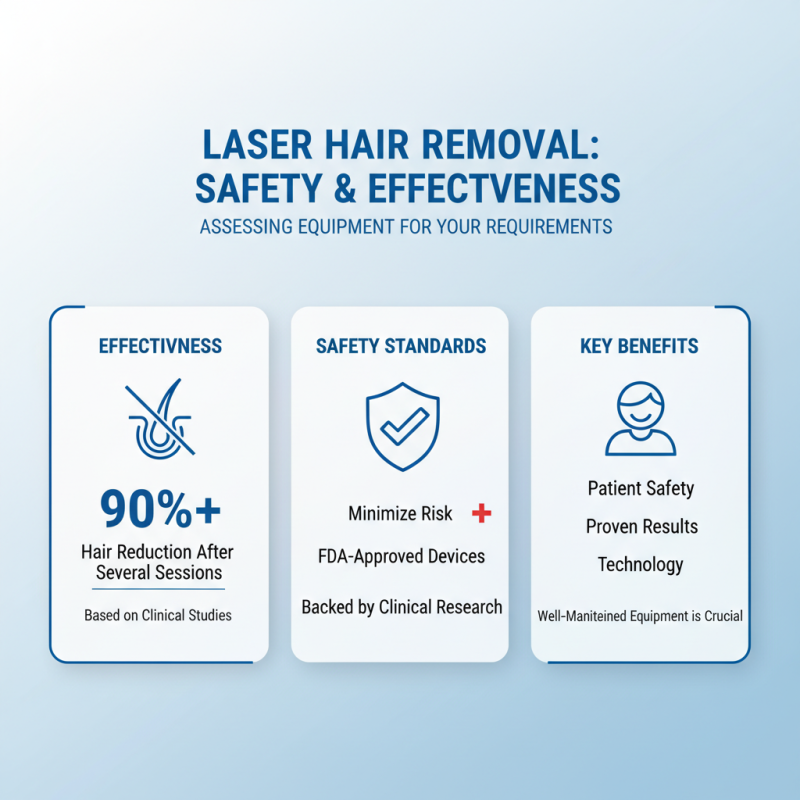
When selecting laser hair removal equipment, thorough research is crucial. Start with manufacturer reputation. A reputable manufacturer often indicates quality standards. Check if they adhere to safety regulations. This can help prevent potential issues during use. Validating credentials through industry certifications adds an extra layer of assurance.
Next, delve into product reviews. Look for both positive and negative feedback. Not every product suits everyone. A laser device that works well for one person may not meet another's needs. Pay attention to consistency in reviews. If many users note a similar flaw, it may require further consideration.
Seek out forums and communities. Engaging with others who have made similar purchases can provide insights. Sometimes, personal experiences reveal details that reviews miss. Reflecting on this information can guide you. It helps ensure your final choice aligns with both your expectations and practical requirements. Making an informed purchase minimizes regrets.
How to Choose the Right Laser Hair Removal Equipment for Your Needs?
| Dimension |
Details |
| Type of Laser |
Alexandrite, Diode, Nd:YAG |
| Skin Types |
Fitzpatrick Scale I-VI |
| Wavelength Range |
755 nm (Alexandrite), 810 nm (Diode), 1064 nm (Nd:YAG) |
| Pulse Duration |
Measured in milliseconds |
| Cooling Mechanisms |
Contact cooling, Cryogen spray, or Air cooling |
| Safety Features |
Skin type detection, Cooling systems, Emergency stops |
| Price Range |
$2,000 - $100,000 |
| Energy Levels |
Adjustable for patient comfort |
| Manufacturer Reputation |
Research reviews and clinician feedback |
| Warranty Period |
Typically 1-5 years |