How to Use High Intensity Focused Ultrasound for Effective Treatments?
High Intensity Focused Ultrasound (HIFU) is gaining attention in the medical field. This innovative technique uses ultrasound waves for targeted treatments. It can effectively treat various conditions, including tumors and cosmetic issues.
The potential of HIFU is significant. However, its implementation can be complex. Many practitioners need clearer guidelines and training. Understanding the technology is crucial for better outcomes.
Patients should also be informed about HIFU's benefits and limitations. Not every case may achieve ideal results. Awareness of these factors is essential for realistic expectations. As technology evolves, ongoing research and practical experience remain vital for effective usage.
Overview of High Intensity Focused Ultrasound (HIFU) Technology
High Intensity Focused Ultrasound (HIFU) technology is a promising non-invasive treatment method. It uses focused ultrasound waves to target specific tissues. This technology is primarily used in aesthetics and oncology. Studies show that HIFU can reduce fat deposits and improve skin tightness effectively. In 2021, the global HIFU market was valued at around $2 billion, expected to reach over $4 billion by 2027.
The precision of HIFU is noteworthy. The ultrasound energy is delivered to selected areas without damaging surrounding tissues. This leads to fewer side effects compared to traditional surgeries. Yet, patients should be aware of the limitations. Some reports indicate that results can vary significantly. In certain cases, multiple sessions may be required for optimal outcomes.
While the technology is evolving, user experience can also differ. A study published in the Journal of Clinical and Aesthetic Dermatology highlighted that satisfaction rates vary. Some patients reported significant improvements, while others noticed minimal changes. It emphasizes the need for realistic expectations. HIFU is not a one-size-fits-all solution, and understanding individual needs is crucial.
Mechanism of Action: How HIFU Works for Targeted Treatments
High Intensity Focused Ultrasound (HIFU) is gaining traction in medical treatments. It operates by delivering focused ultrasonic waves to specific tissue areas. This energy generates heat and causes thermal damage, effectively targeting and destroying unwanted cells without harming surrounding tissue. Studies indicate that HIFU can achieve a tissue temperature rise of 65 degrees Celsius within seconds, promoting apoptosis in cancerous cells.
Data from various clinical reports highlight HIFU's potential in treating tumors. A study published in The Journal of Urology showed a 94% success rate in prostate cancer treatment. However, it is not without limitations. Some patients experienced minor side effects, like discomfort and swelling. Additionally, not all tumors are suitable for this therapy. Treatment plans must consider tumor size and location.
Continuous advancements in HIFU technology are promising. Future research may enhance precision and efficacy. As the medical community explores combination therapies, challenges remain. Identifying the ideal patient population is crucial. Some practitioners advocate further studies to understand long-term outcomes. Balancing effectiveness and patient safety is key for maximizing HIFU's benefits.
Applications of HIFU in Medical Treatments and Aesthetic Procedures
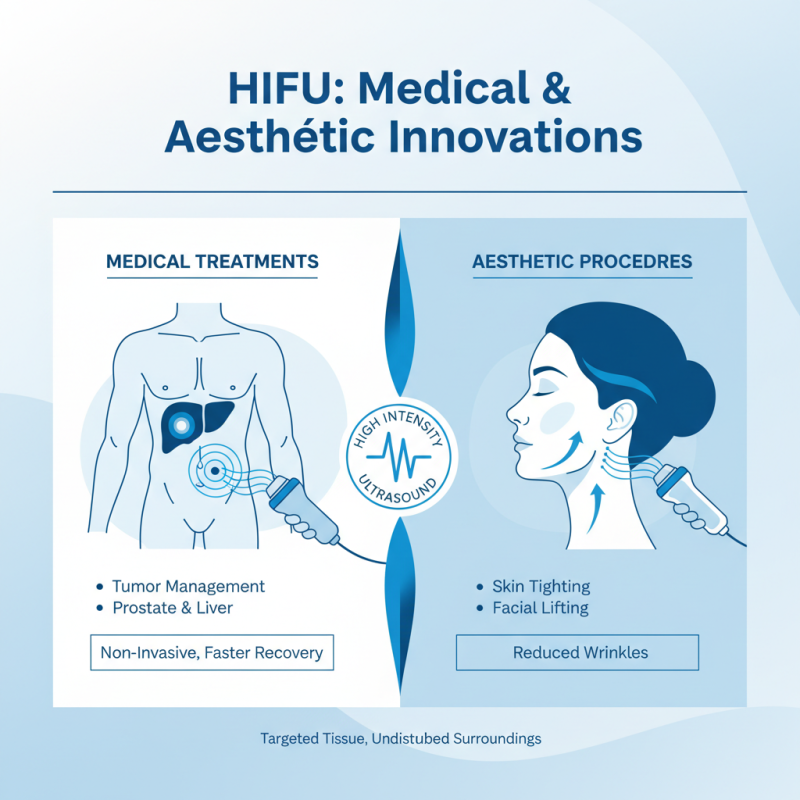
High Intensity Focused Ultrasound (HIFU) is gaining popularity in various medical and aesthetic fields. This technology uses focused ultrasound waves to target tissue without affecting surrounding areas. In medical treatments, HIFU shows promise in managing tumors, especially in organs like the prostate and liver. Physicians appreciate its non-invasive nature, which leads to shorter recovery times.
In aesthetics, HIFU is celebrated for skin tightening and contouring. Patients often seek this procedure for facelifts without surgery. The device delivers ultrasound energy deep into the skin, stimulating collagen production. However, reactions can vary, and some users might experience temporary discomfort. It's essential to consult with professionals to discuss potential side effects. The effectiveness of HIFU can differ from person to person, leading to mixed reviews among users.
While many are pleased with the results, some find the outcomes less impressive than expected. Realistic expectations are crucial. HIFU doesn't replace traditional surgery for everyone. Understanding these nuances helps individuals make informed decisions about their health and appearance.
Benefits and Risks Associated with HIFU Treatments
High Intensity Focused Ultrasound (HIFU) is gaining popularity for various treatments. It’s known for non-invasive applications in aesthetic and medical fields. However, understanding the benefits and risks is crucial for anyone considering this option.
The primary benefit of HIFU is its non-surgical nature. Patients experience less discomfort than traditional procedures. Many report quicker recovery times as well. This is appealing for those with busy lifestyles. Moreover, HIFU can target specific areas with precision. This accuracy minimizes damage to surrounding tissues. On the flip side, HIFU isn’t without risks. Some people may experience temporary swelling or redness in treated areas. Rarely, more severe side effects like burns can occur. Not everyone responds to HIFU equally. Results vary widely among individuals.
Potential patients should weigh these factors carefully. It's important to consult with a qualified practitioner. They can help assess if HIFU is suitable for you. This decision shouldn’t be taken lightly. What works for one person may not work for another. Personal health history can play a significant role. Taking all this into account is essential for a successful outcome.
How to Use High Intensity Focused Ultrasound for Effective Treatments? - Benefits and Risks Associated with HIFU Treatments
| Aspect |
Benefits |
Risks |
| Skin Tightening |
Non-invasive, promotes collagen production. |
Mild discomfort, swelling, or bruising. |
| Body Contouring |
Targeted fat reduction, minimal downtime. |
Possible pain, numbness, or temporary changes in skin sensation. |
| Facial Rejuvenation |
Improved skin texture and wrinkle reduction. |
Risk of burns or scarring, though rare. |
| Medical Applications |
Used in treating tumors and fibroids. |
Potential for tissue damage, generally low risk with skilled practitioners. |
| Overall Effectiveness |
Long-lasting results, minimal maintenance. |
Varied results based on individual response. |
Preparation and Aftercare for High Intensity Focused Ultrasound Procedures
Preparation for High Intensity Focused Ultrasound (HIFU) procedures requires careful planning. Patients should first consult with a qualified practitioner to discuss their medical history. This helps identify any potential risks. It's crucial to avoid blood thinners a week before the procedure. Staying hydrated is important, too. Drinking adequate water can enhance skin elasticity and improve treatment effectiveness.
After the procedure, some care is necessary. Patients might experience mild swelling or redness. This is normal but should be monitored. Ice packs may help reduce discomfort. Moisturizing the treated area is beneficial as well. It's essential to keep the skin clean and avoid sun exposure for a few days.
Reflection on personal recovery is vital. Each person's experience can vary, and adjusting aftercare based on individual responses is a good practice. Listening to your body will guide you on when to return to daily activities.