Top 5 Laser Removal Machines You Need to Know About?
In today's aesthetic industry, the demand for effective skin treatment options is soaring. According to a report by Grand View Research, the global laser removal machine market is expected to reach $3 billion by 2027. This growth highlights the increasing reliance on these advanced technologies for tattoo removal, hair removal, and skin rejuvenation.
Laser removal machines offer precision and minimal recovery time, making them appealing to both practitioners and patients. However, not all machines are created equally. The market is flooded with various options, and choosing the right one requires deep knowledge and experience.
Despite the advancements, challenges remain. User training and safety protocols must be addressed to ensure optimal results and patient satisfaction. The efficacy of treatments can vary based on equipment quality and technique. Understanding the features of top machines is key for anyone considering investment in this space.
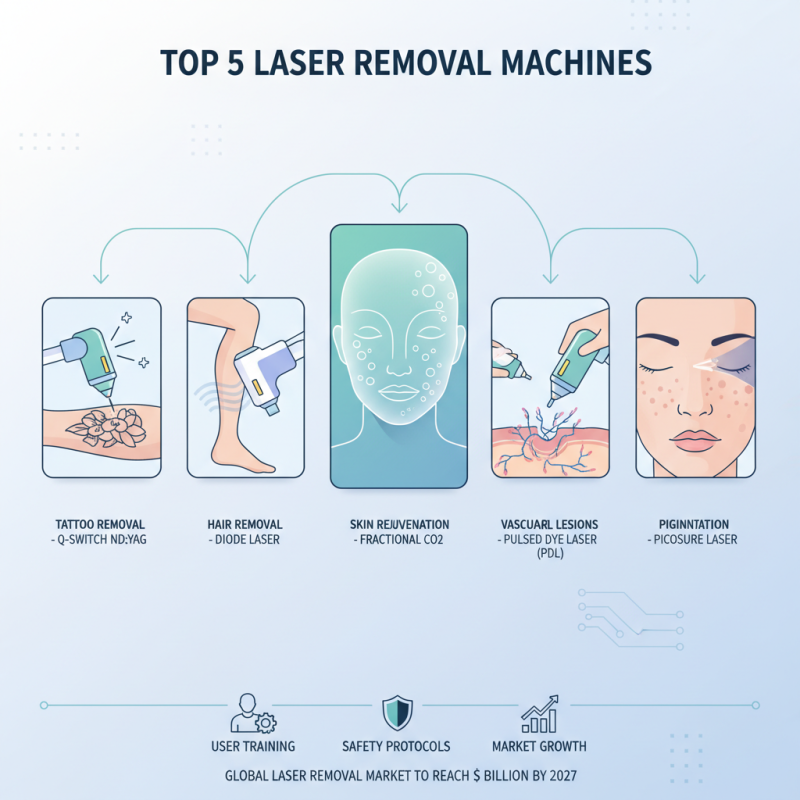
Top 5 Laser Removal Machines: Industry Insights and Innovations
The laser removal industry has seen notable advancements recently. Innovative machines have transformed how we approach unwanted hair, tattoos, and skin blemishes. With each new model, efficiency and safety improve, offering clients better experiences.
One major trend is the development of wavelength technology. This allows for precise targeting of different skin types and tattoo pigments. Users can feel more confident knowing that treatments are tailored to their specific needs. However, not all machines are suitable for all conditions, highlighting the importance of professional assessments before treatment.
Despite the progress, challenges remain. Some devices can lead to discomfort or require multiple sessions. It’s crucial to educate clients on realistic outcomes. Additionally, keeping abreast of safety standards is vital for practitioners. A commitment to ongoing training and understanding of the latest research can help ensure optimal results and patient satisfaction.
Understanding the Different Types of Laser Removal Technologies Available
Laser removal technologies have evolved significantly over the years. Various types of lasers are now available for different applications, providing options for hair, tattoo, or skin imperfection removal. According to industry reports, the global market for laser removal devices is expected to reach $1.5 billion by 2025. This growth highlights a rising demand for effective and efficient laser treatments.
The most common types include Q-switched lasers, which are effective for tattoo removal. These lasers emit short bursts of high energy, breaking down the ink particles in the skin. Another popular choice is the Nd:YAG laser. It penetrates deep layers of skin, making it suitable for hair removal and vascular lesion treatments. Even with their advantages, these technologies require skilled practitioners for optimal results.
However, selecting the right laser depends on individual skin types and concerns. Not all lasers suit every skin tone or condition. For instance, patients with darker skin may face higher risks of hyperpigmentation. The right assessment is crucial. Research shows that approximately 20% of clients may experience side effects, underscoring the importance of informed decisions in laser treatments.
Key Features and Specifications of Leading Laser Removal Machines
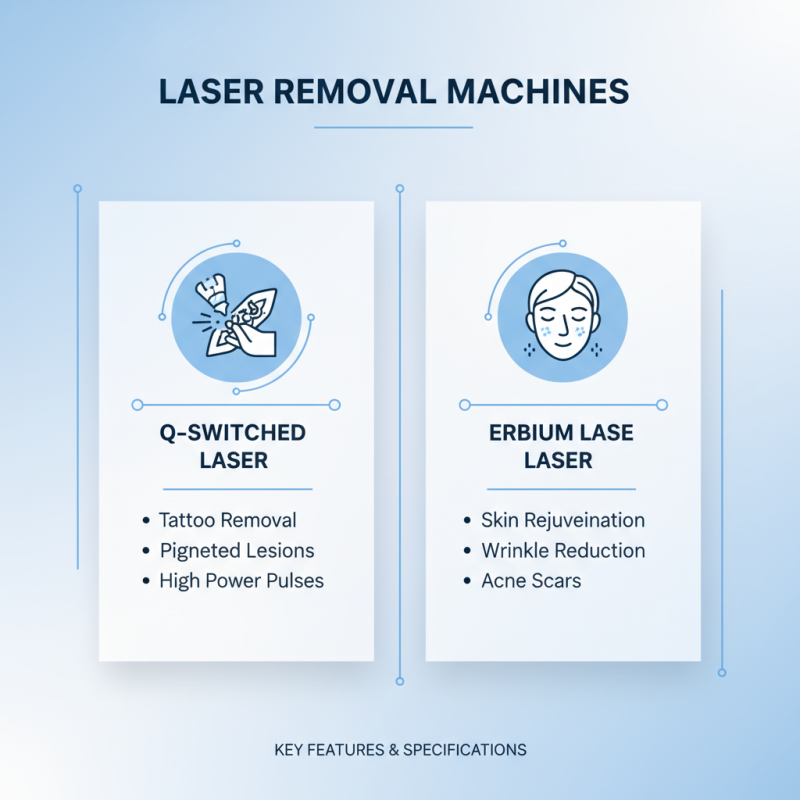
Laser removal machines have become essential tools in various aesthetic and medical settings. Understanding their key features and specifications can greatly impact their effectiveness. One critical aspect is the type of laser technology used. Different lasers, like Q-Switched and Erbium, serve different purposes. For instance, Q-Switched lasers are often preferred for tattoo removal and pigmented lesions. In contrast, Erbium lasers excel in skin rejuvenation.
Another vital specification is the wavelength range. The optimal wavelength determines how effectively a laser penetrates the skin. For example, a wavelength around 532 nm is suitable for treating darker pigments, while 1064 nm lasers are often used for deeper skin tones. Additionally, pulse width and energy settings play crucial roles in treatment safety and efficacy. A machine that allows fine adjustments can cater to individual skin needs.
Beyond specifications, the user experience is significant. Machines should come with user-friendly interfaces and safety features to ensure a smooth operation. Some devices incorporate cooling systems to enhance patient comfort. However, not all machines guarantee optimal outcomes; insufficient training or improper settings can lead to uneven results and side effects. Understanding these nuances is essential for safe and effective use.
Market Trends and Growth Projections for Laser Removal Equipment
The laser removal equipment market is witnessing dynamic growth. According to a report by Grand View Research, the global market is projected to reach $3.59 billion by 2025. This growth is driven by the rising demand for aesthetic treatments. People seek effective ways to remove tattoos, scars, and unwanted hair.
Technological advancements play a significant role. Modern lasers offer enhanced precision and reduced downtime. Research shows that 70% of users report high satisfaction rates. However, challenges remain. Many practitioners lack training on the latest technologies, which can lead to inconsistent results.
Consumer awareness is vital. Many individuals are still unsure about the benefits of laser treatments. Educating potential clients can foster trust. The market is also affected by regulatory hurdles. Compliance with local laws varies widely, impacting accessibility. Investing in training and awareness can enhance professional credibility and service quality.
Top 5 Laser Removal Machines You Need to Know About
| Device Model |
Laser Type |
Wavelength (nm) |
Treatment Areas |
Average Price ($) |
| Model A |
Nd:YAG |
1064/532 |
Tattoo removal, Hair removal |
12,000 |
| Model B |
CO2 |
10600 |
Skin resurfacing, Acne scars |
18,000 |
| Model C |
Alexandrite |
755 |
Hair removal, Pigmentation |
15,000 |
| Model D |
Diode |
810 |
Hair removal |
10,000 |
| Model E |
Fractional |
Variable |
Skin rejuvenation, Wrinkles |
20,000 |
Comparative Analysis of Laser Removal Machines and Treatment Efficacy
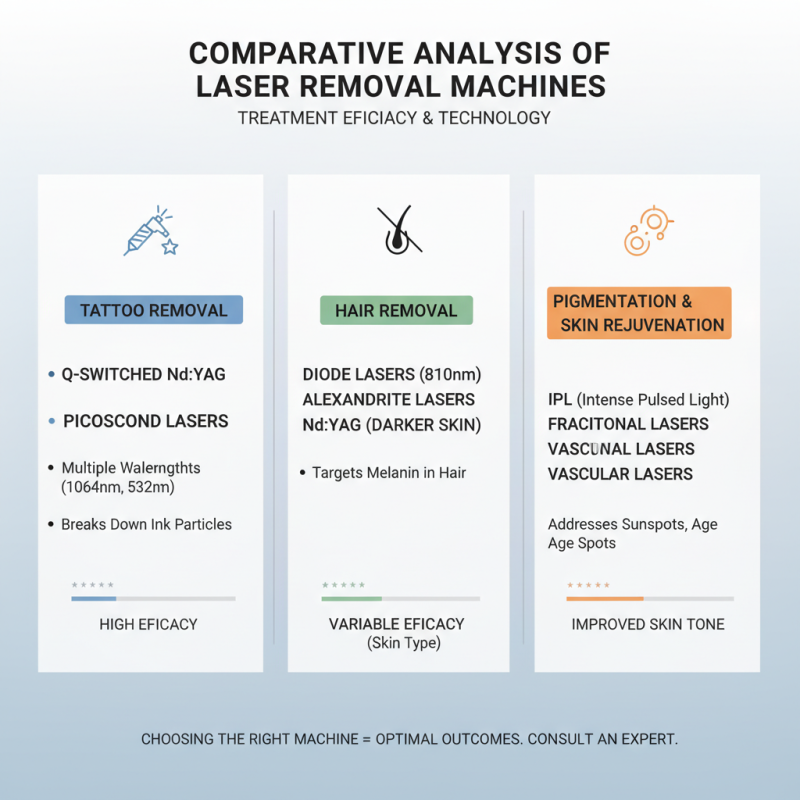
When considering laser removal machines, efficacy varies significantly across different devices. Each machine utilizes distinct laser technologies and wavelengths. This directly influences the treatment's effectiveness for various skin types and conditions. For instance, some machines excel in tattoo removal, while others are better for hair or pigmentation issues.
Evaluating treatment outcomes also involves understanding potential side effects. Not every machine may deliver the same safety or comfort level. Patients often report varying degrees of pain, redness, or swelling. These factors are crucial in assessing overall satisfaction.
Moreover, the expertise of the operator plays a vital role. An experienced technician can significantly enhance treatment results. However, a lack of expertise may lead to suboptimal outcomes or increased risks. It's essential to reflect on these elements when making choices about laser treatments. Each individual's needs and experiences differ, so personal research remains critical.